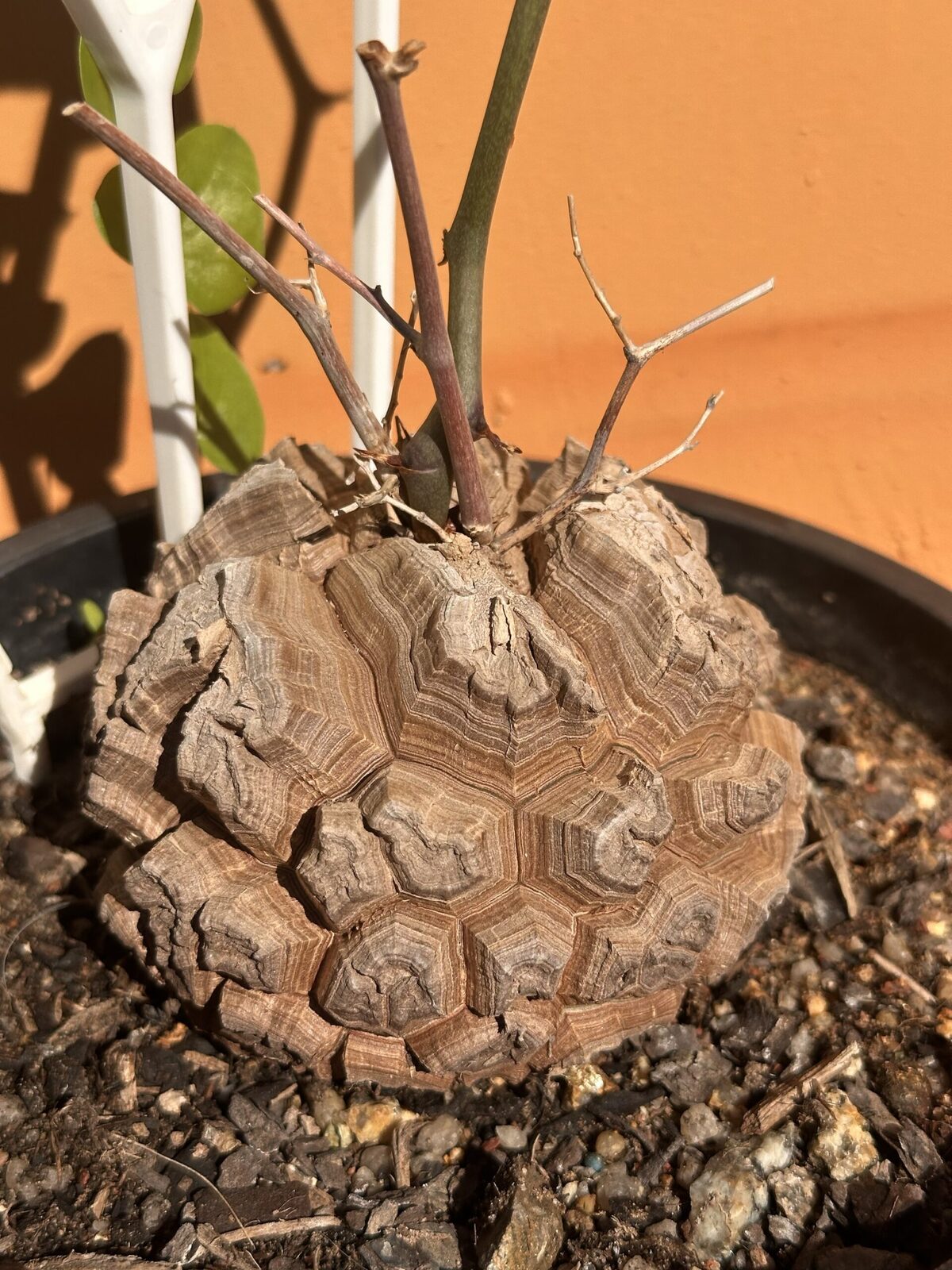
Meet your Elephant's Foot
Dioscorea elephantipes is an African caudex succulent, best known for the big tuber that sits above the ground and looks like an elephant's foot or a tortoise shell. In ideal conditions that tuber can grow to over 6 feet across.
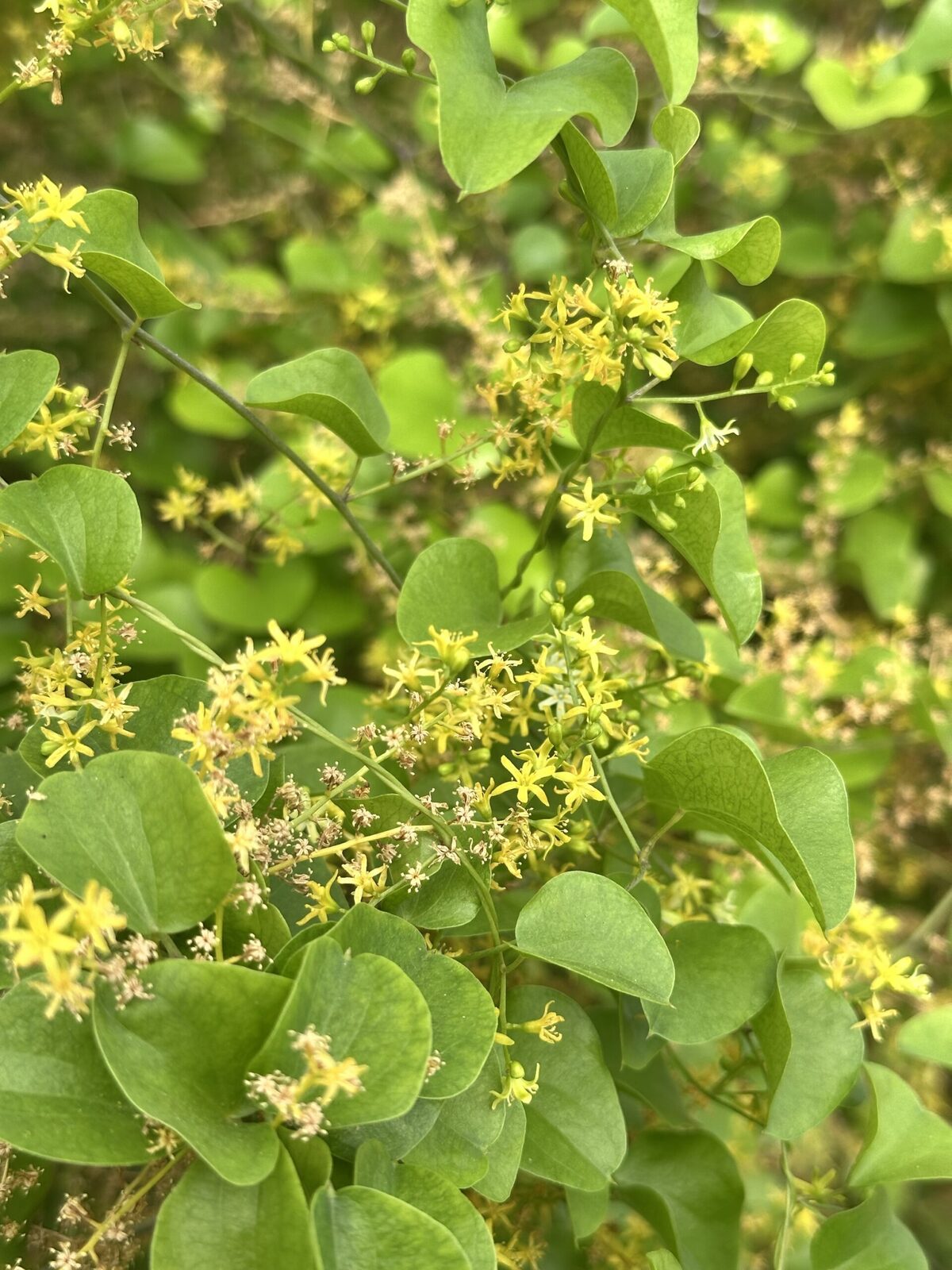
Its creeping vines carry small, green, heart-shaped leaves, and tiny sweet-smelling flowers appear in early winter.
How its year goes
Late spring
The leaves and stems dry out and die. Don't panic: it's saving energy for the heat of an African summer. Once the vines are completely dry you can trim them back, but not so close that you damage the tuber.
Going dormant
Don't water for the first 4 to 6 weeks of dormancy. After that, give it its first drink for the summer, then no more until new growth has begun.
Mid-summer
New leaves start to sprout. Once it's properly growing again, go back to your regular watering.
Cooler months
This is its growth phase, and it likes to drink a lot. Give it a good drink, then let it dry out completely before the next one.
Water around the side of the pot so you don't wet the tuber. That corky wood can start to rot if it gets too wet.
Want more growth? Add a very weak fertiliser when you water during the growth phase.
Repotting and planting
What to plant it in
Use a well-draining potting mix, or sandy loam if it's going straight into a garden bed. Any compost must be very well rotted. If you're moving up to a larger pot, choose a porous material like terracotta or cement, which lets the soil dry out quicker.
Where to put it
In the ground, plant it on top of a dirt mound rather than digging a hole, so it drains easily. Young plants won't cope with frost. Mature plants will likely tolerate down to -4°C, and temperatures over 40°C.
Still stuck?
Send us a photo. We've seen it all, and you're never bothering us.
Growing cacti too? Here's our full cactus care guide.
Cactus Country · 4986 Murray Valley Highway, Strathmerton VIC 3641 · cactuscountry.com.au/elephants-foot-care