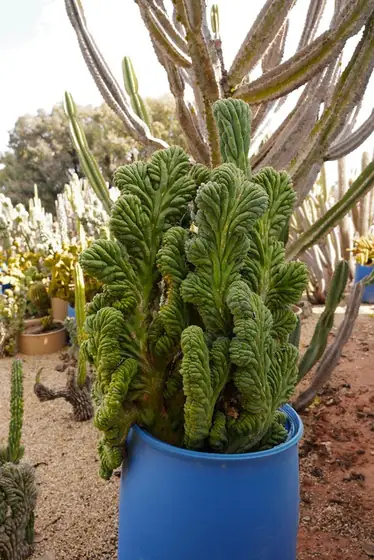
Stop 1: Trichocereus Pachanoi Monstrose
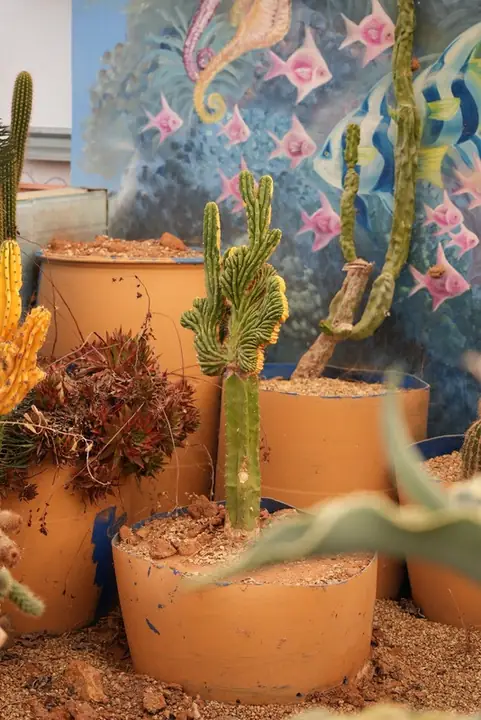
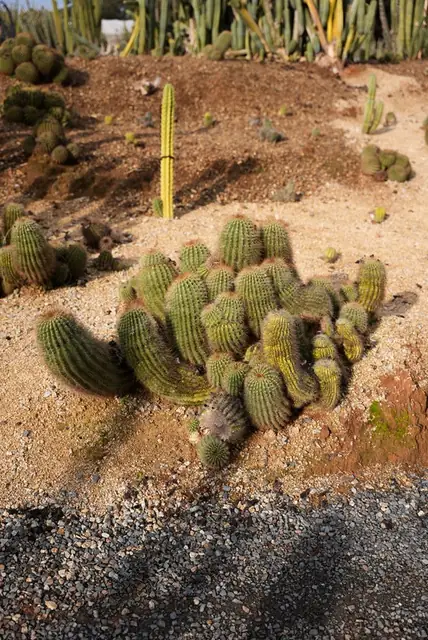
This is the “Cristate Form” of the Monstrous. These plants don't grow upright as cacti usually do but in all sorts of different angles.
Take one home: San Pedro cuttings Or ask at Plant Sales, near reception.
 The Garden Trail
Main site
Your pocket guide
The map, ten trails and every numbered stop, right here on your phone.
iPhone: tap Share in Safari, then Add to Home Screen.
Android: tap the Chrome menu, then Add to Home screen.
Once this page says it's saved, you can open it anywhere in the garden, reception or not.
Tap a name to light up that trail, then pinch or use the buttons to zoom in.
Walk on designated paths only and never touch any cacti. Make sure kids understand it as well. The prickles really hurt!
Never pick fruit or seeds from cacti, they have vicious spikes.
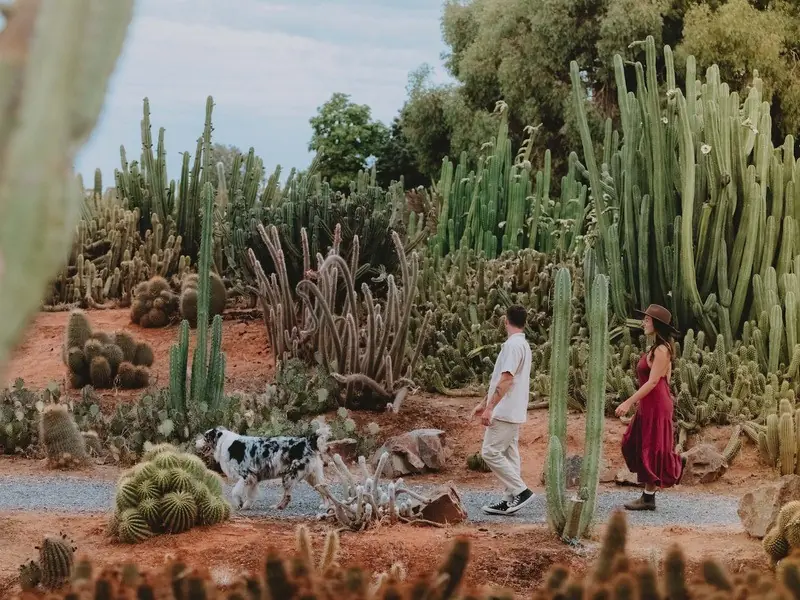
Dogs are always welcome but for the sake of others, please keep them on leash (and don't forget to clean up after them).
We are a smoke-free facility. If you really need to, do it at the designated smoking area in the car park.
Jim Hall purchases a part of his father's cacti garden and relocates it to his property in Strathmerton, his family home.
Jim is approached by Ed Kroemer's family (the man had recently passed) and requested in his will that his cacti collection be kept together. The family had heard about Jim’s plans to develop a cactus garden and were thrilled that Jim and Julie decided to purchase the collection.
Jim and Julie open their 1 acre cactus garden to the public (for reference, the current garden is almost 13 acres).
The Hall family visits Mexico which inspired the bright colours and building of the Mexican style courtyards that are present today.
The 2nd acre of cactus garden is opened: the garden now features a South African section, North American section, succulent section and aloe section.
The first wedding held was Jim and Julie's daughter's, Sarah's wedding in September 2017. Lots of weddings and elopements have followed under the cacti since then.
Jim and Julie decided to quit zucchini farming and dedicate themselves full-time to Cactus Country. That year, the restaurant was opened and a real chef hired.
During COVID, a new courtyard, additional cafe areas and the famous pink dome were built.
Cactus Country wins Gold at the Victorian Tourism Awards.
In the following years, Jim and Julie hope to increase the display of coloured flowers, add exhibitions of sunflowers, sculptures and do different collaborations with other artists.
The Cactus Reef
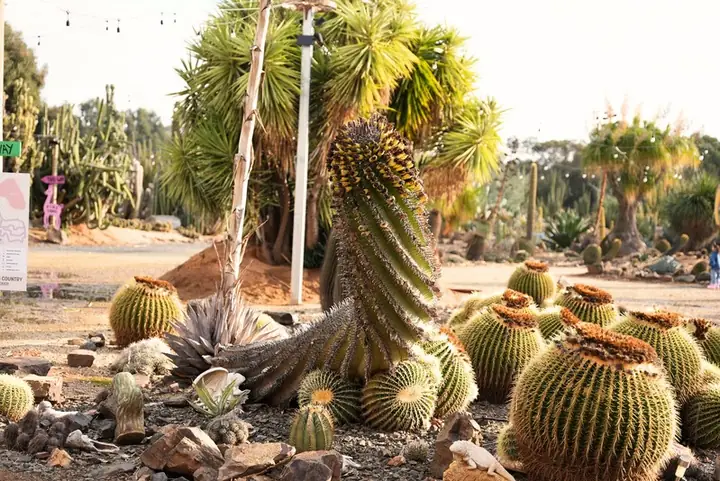
“The Cactus Reef” is made up of plants that resemble coral under the sea. They are referred to as ‘Monstrose’ or ‘Tortured’ Cacti, and are plants which are not following an even growth pattern.
This is the “Cristate Form” of the Monstrous. These plants don't grow upright as cacti usually do but in all sorts of different angles.
Take one home: San Pedro cuttings Or ask at Plant Sales, near reception.
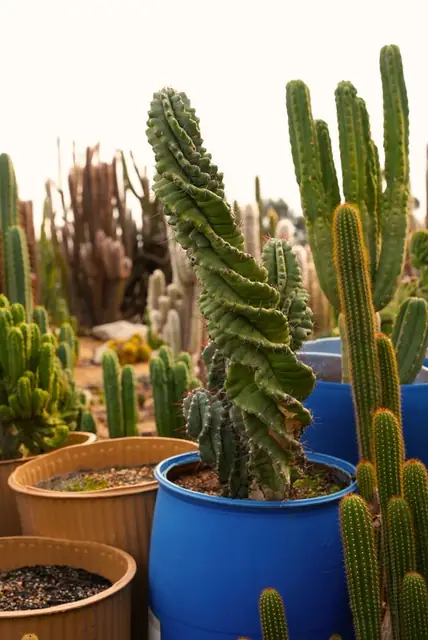
This unusual looking plant has grown in a spiral form.
Jim has been having a lot of fun in his laboratory learning how to graft 2 plants together. We have a new title for him now: a “Cactologist”. By grafting a rare or special plant on top of a stock plant you can make the special ones grow much faster.
You do it as follows:
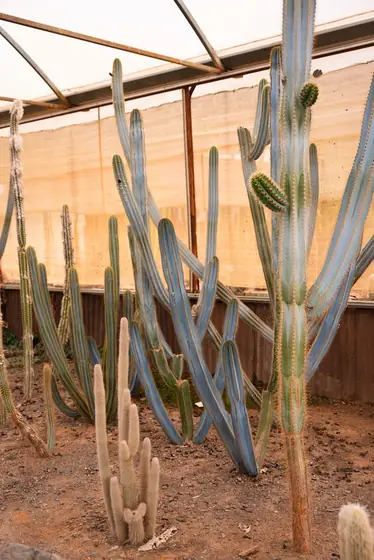
The Pilosocereus family is one of the most spectacular, columnar, tree-like cacti. They can grow up to 10m tall and have these striking blue branches (which by the way, can sometimes wash off if grown outdoors).
The Andes Walk
It’s so interesting that cacti can exist in extreme cold conditions such as the Andes mountains. These plants have made many adaptations in order to survive in these harsh environments.
A stunning plant to introduce you to the wild Andean Mountains.
Or to be more exact, a Fat Clumping Trichocereus. The ribbing common among cacti allows the plant to expand and contract in order to collect and conserve water for dry and hot days.
Take one home: Soehrensia hybrid pups Or ask at Plant Sales, near reception.
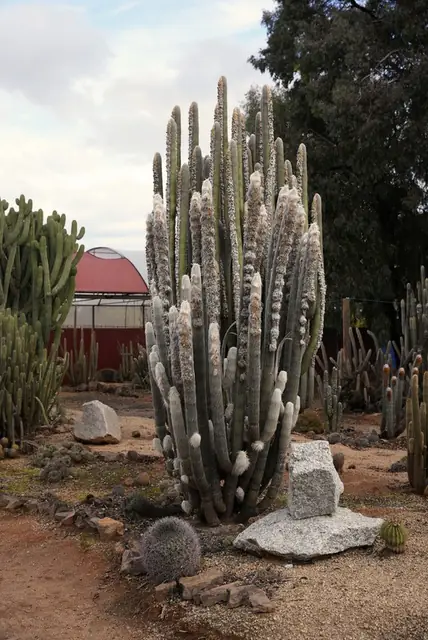
This Stem Cactus originates from the dry mountain slopes from Ecuador to Central Peru. Some varieties can grow as high as 6m (or 20ft). This mature plant has formed a cephalium, which is the thick wooly covered structure that produces the flowers.
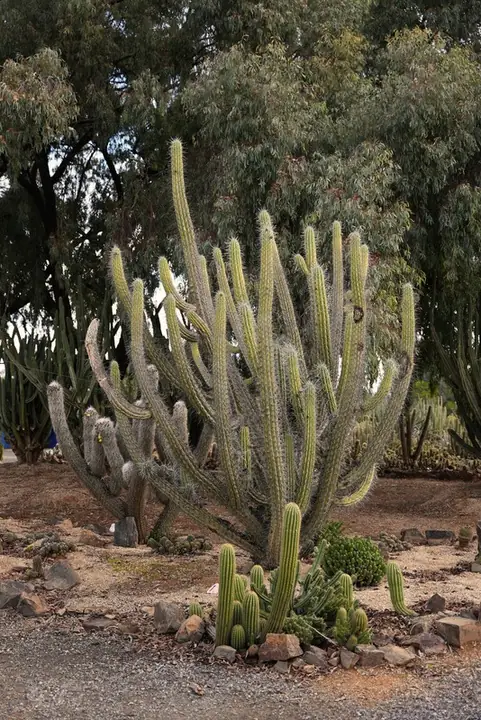
This plant is referred to as the “Argentine toothpick”: the spines can be up to 15cm (6in) in length! Cacti developed these huge spines to prevent grazing animals from eating it.
This cactus grows edible fruit called the Peruvian apple: they are sweet, nutritious and very delicious! We use the fruit of this plant to make our cactus ice-cream.
Notice how this cactus does not have leaves like “normal” plants? The stem or trunk of the plant has the green colour to take over the role of photosynthesis (which is the essential food making process that happens in plants).
Try it at the barThe Famous Cactus Combo$15Cactus cake and two scoops of the ice cream made from this fruit.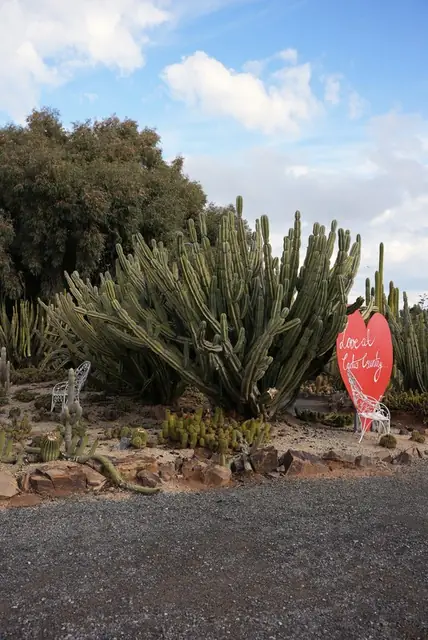
Also known as “The Old Man of The Andes”. The thick hair covering these cacti protects them from the fierce Andes' nature elements: they can be covered with snow for 6 months of the year while the hair forms an air pocket between the snow and the flesh of the plant, keeping it warm. The hair also protects the plant from the high UV rays at high altitudes.
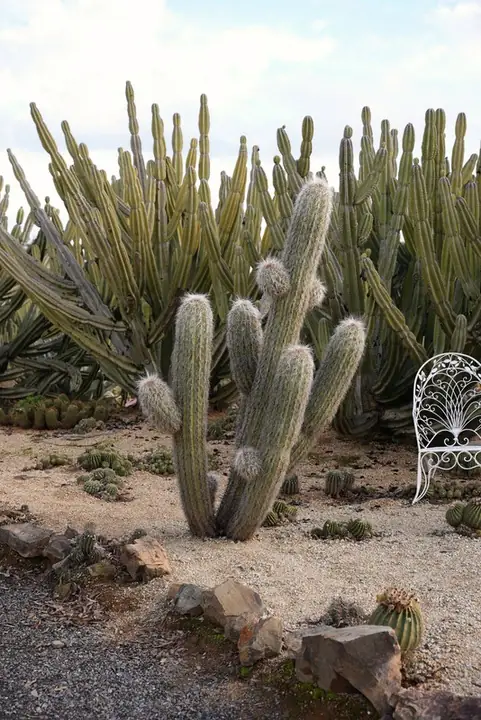
A Pasacana similar to this one was transported from our garden to The National Museum of Canberra. It was a feature for the Atacama Desert Exhibition.
We were not able to find a transport company willing to transport a 3 metre cactus, so Jim and Julie had to deliver it themselves. Jim also supervised the planting procedure in a specially built wooden pot. This one is a Monster and even has a face.
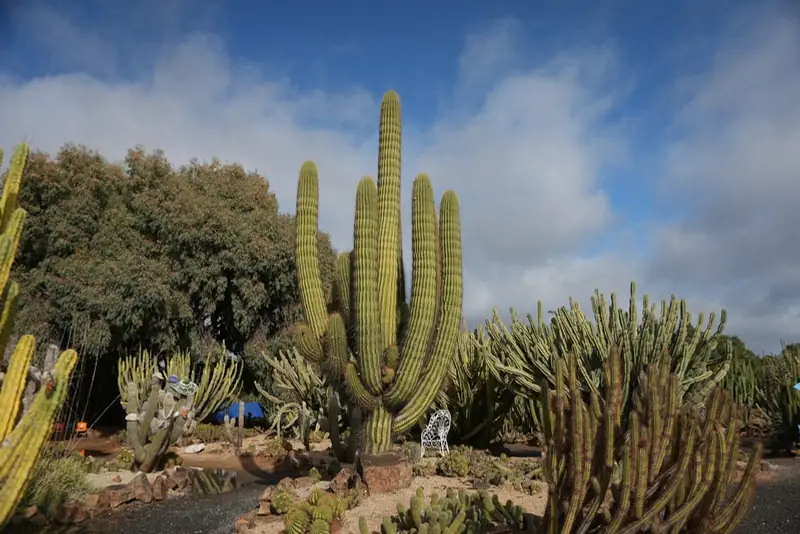
The Wedding Walk
Perhaps you're wondering why this trail is called The Wedding Walk? Keep walking and you'll understand! Venture down the aisle to the wedding arbour and take a pose!
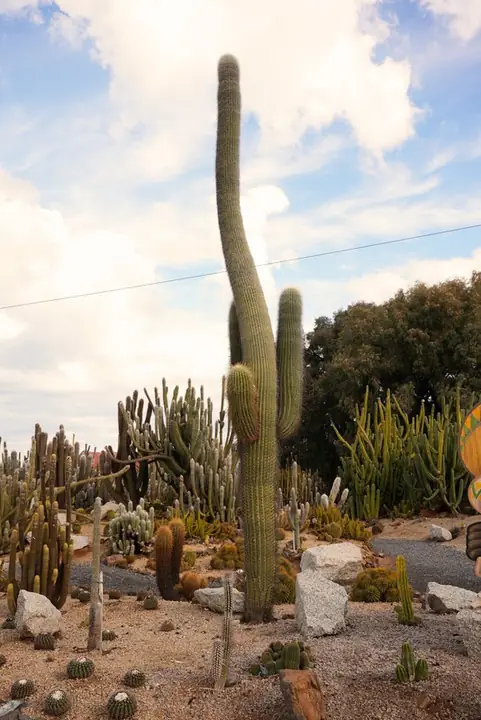
One of the very large trichocereus, growing up to 10 metres high. The juicy flesh of such a cactus would be welcome to quench your thirst or satisfy your hunger if you were stranded in the desert. Most cacti are not poisonous and the inside flesh is comparable to a juicy apple, although without the pleasant taste.
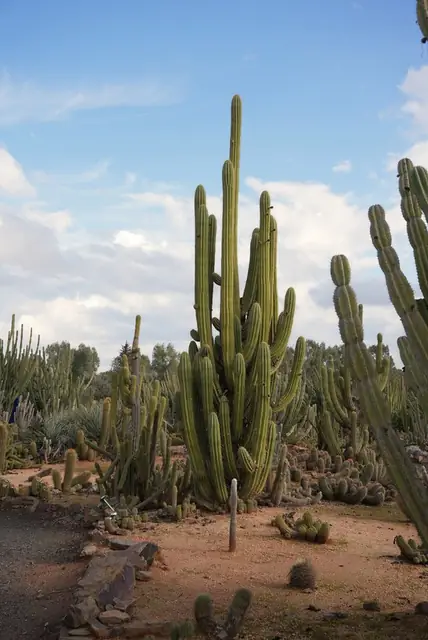
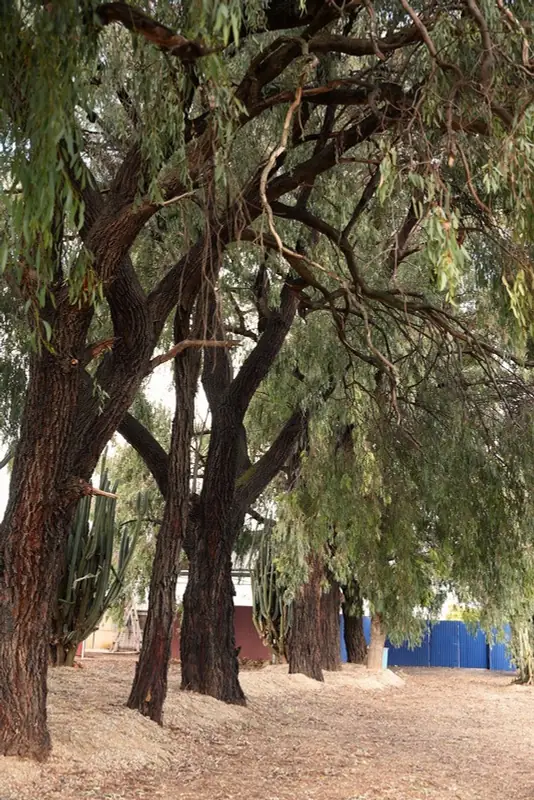
This is a good opportunity to compare trees and cacti. There are many differences and they are all adaptations to enable cacti to grow in the desert conditions where other plants can’t survive.
The most important survival adaptation is to reduce water loss: instead of a bark they have a green trunk that is still very woody underneath to support the plant, but the green colour allows it to photosynthesise which enables it to convert sunlight into food. If cacti had leaves like a tree, it would lose too much water through its leaves and not survive in harsh conditions.
Try an experiment at home by tying a plastic bag over a branch with leaves during the hottest part of the day and see how much water there will be in the bag in just a few hours.
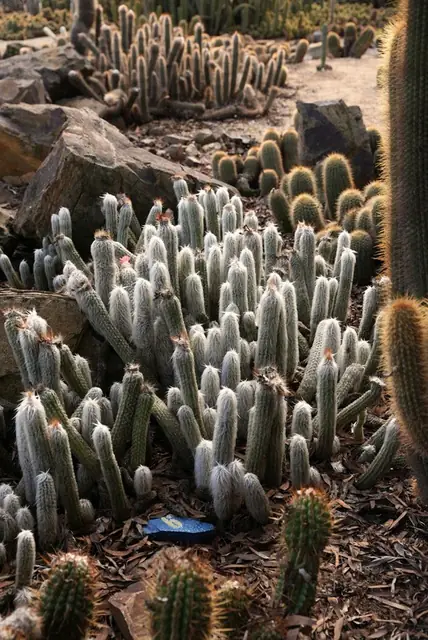
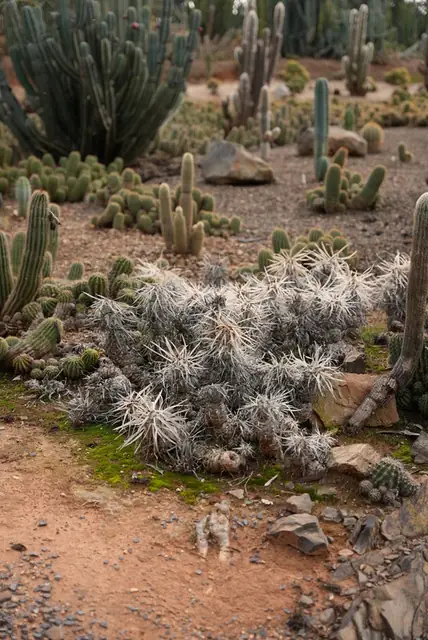
These cute little hairy plants look like the “Cousin Itt” family. They grow well in a pot and have beautiful red flowers.
Silver Torch
Notice how this plant has horizontal flowers which only appear on the Northern side of the plant? This is the side which gets most of the sun.
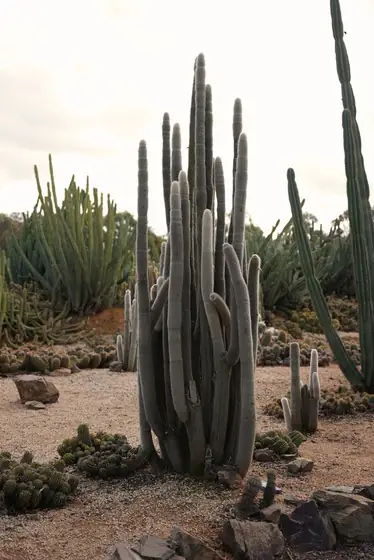
These strange looking “Alien” type plants grow high on the Andes. They have ribbon-like spines and are related to the Opuntia family.
Take one home: Tephrocactus Paprycanthus Or ask at Plant Sales, near reception.






Theo's Walk
Turn left and walk up the hill to find the next trail in the garden. The white trail takes you onto a lower path which blocks the view of the surroundings so you'll really feel like it is just you and the cacti. Walk straight ahead on the path.
In 2015, we purchased a collection from Theo and his wife in Monbulk, VIC. The couple immigrated from Germany and shared a passion for gardening and in particular, cacti. Amazingly, they grew everything from seed and nurtured them for over 60 years. They decided to retire to warmer weather in Queensland so we bought some of their collection. John, Jim and Julie's son took many trips back and forth with the trailer to move them all. We have dedicated this trail to Theo’s Collection.
Also called "Binny". This was one of the first Cactus Country Hybrids that Jim named after his niece. It has a beautiful large pink flower. Since then there have been a lot of different species that Jim has given names to. For example, there is the CC series after Cactus Country, the J Series which are Jim’s Trichocereus species and the JP series, Jim's Pasacana species. Cacti are very unstable genetically and cross very easily with other species.
Take one home: CC Super San Pedro Or ask at Plant Sales, near reception.
We thought this bank of snake-like cactus resembled the Medusa Snakes which play an important role in the old Greek mythology.
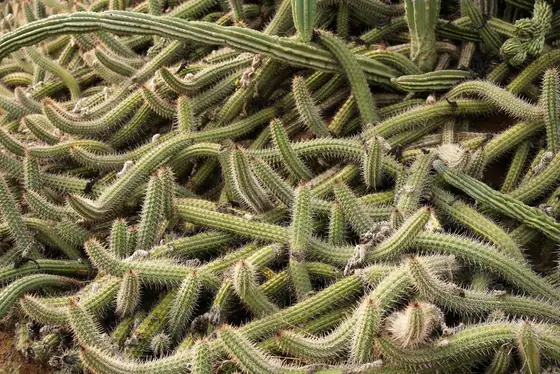
On this plant you can see the growth: notice how this plant is growing out of a branch that has fallen over? This is a typical example of how cacti spread themselves along a larger area. Notice how woody the plant on the ground is? It kind of resembles a tree's branch.
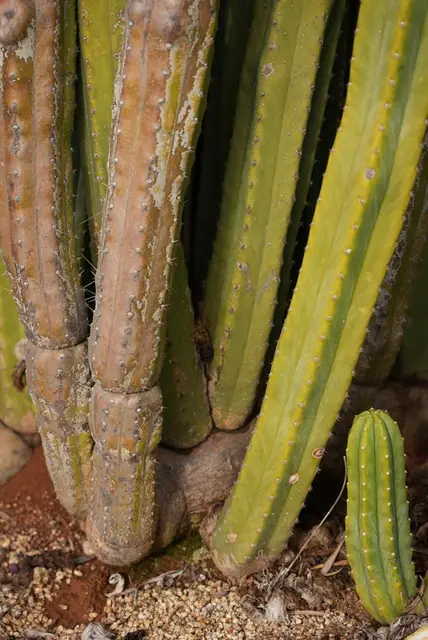
This is a cross between a Pasacana (which is a Monster cactus) and an old man Oreocereus (the hairy cactus).
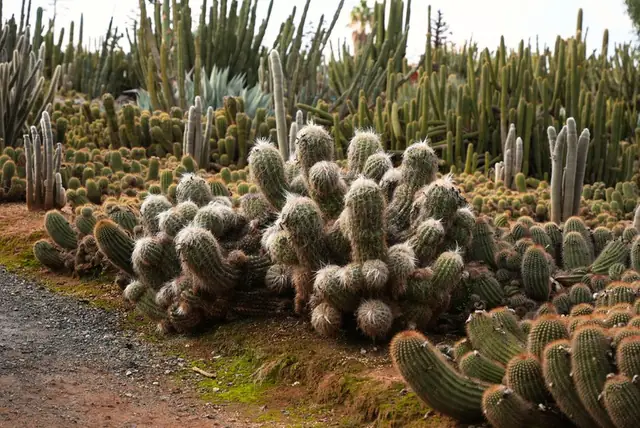
The Valley of the Giants
It’s incredible to see how fast these plants have grown. We have had to prop some up because they're growing so fast their root system hasn't been able to establish well enough to keep the plants upright.
This trail is dominated by Cactus Country Hybrids bred by Jim in his hot houses. He specifically tries to cross fast growing Trichocereus varieties with smaller growing plants with beautiful coloured flowers.
This magnificent plant is a hybrid grown by Jim of a Pasacana and the small growing Echinopsis.
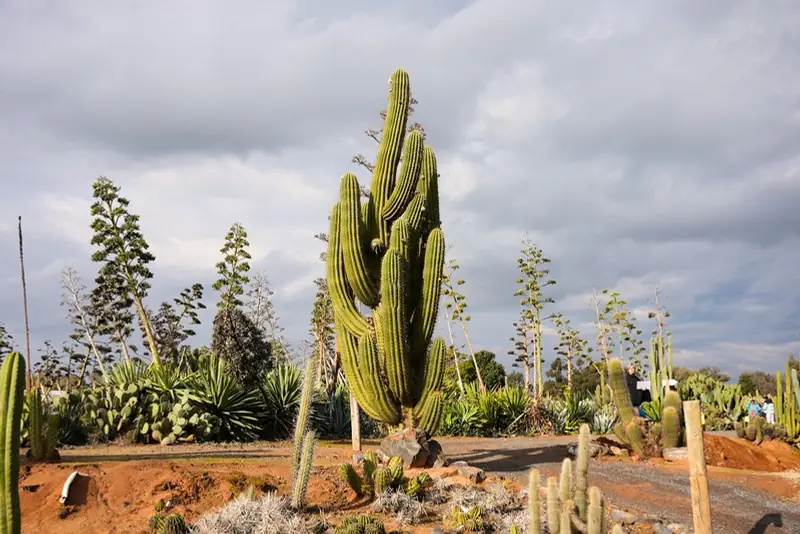
Commonly referred to as the Bolivian torch. The one similar to the right is the blue form, called the Blue Torch, commonly called Psychonaut and is a Cactus Country hybrid.
Take one home: Trichocereus ‘Psycho0’ Or ask at Plant Sales, near reception.
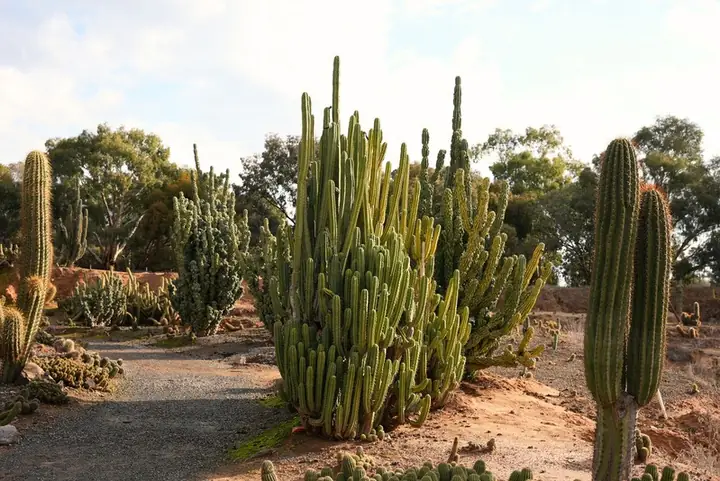
This one has purple-pink flowers which is very unusual as most Trichocereus have white flowers.
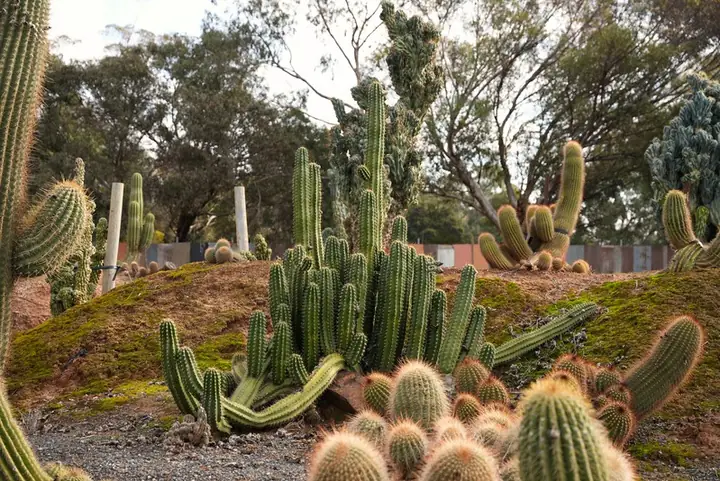
Enjoy wandering along this path. If you get the sun behind this section of garden you will notice the beautiful red colour to the spines of some varieties.
The Little Mexico
Welcome to Mexico and North America where cacti feel very much at home. In these areas, you can find many different forms of cacti due to the varying climatic and soil conditions. However, because it's a huge area, you would need to travel thousands of kilometres to witness this variety of plants.
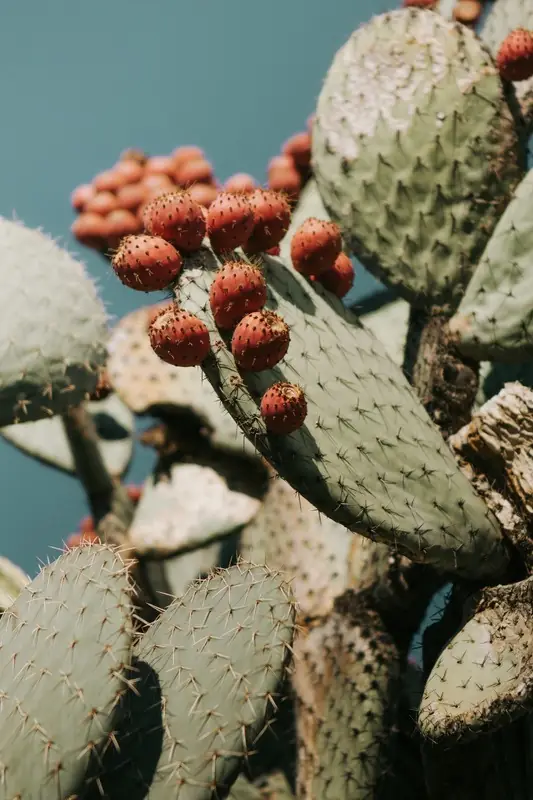
There are many different forms of Opuntia, which you may notice in this section of the garden. Many people enjoy the fruit of these plants, which can be eaten raw or used to make jams, fruit pastes, syrups and beverages. The inside of the leaf can also be eaten raw in salads, or be fried or pickled. Our Cactus Cake is made from the flesh of the leaf of one of these varieties.
Try it at the barCactus Cake$10Homemade with opuntia, served with cream cheese icing and orange syrup.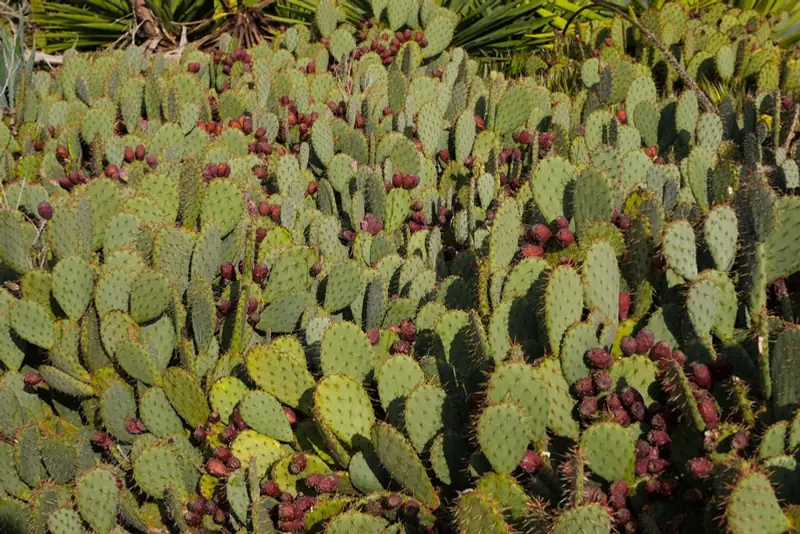
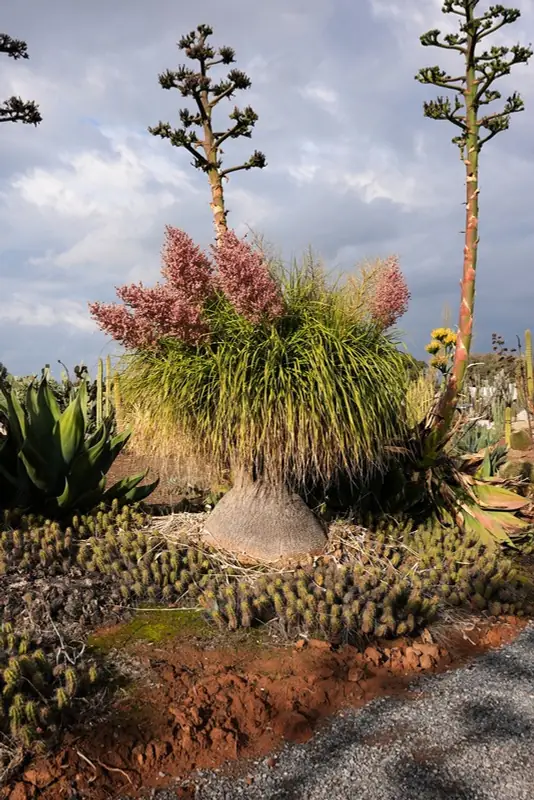
This is another example of how plants have adapted to survive in the harsh desert environment. They store water in their trunk and use it during the driest times of the year. Further along the path, there is another specimen of Pony Tail with multiple branches. Can you spot it?
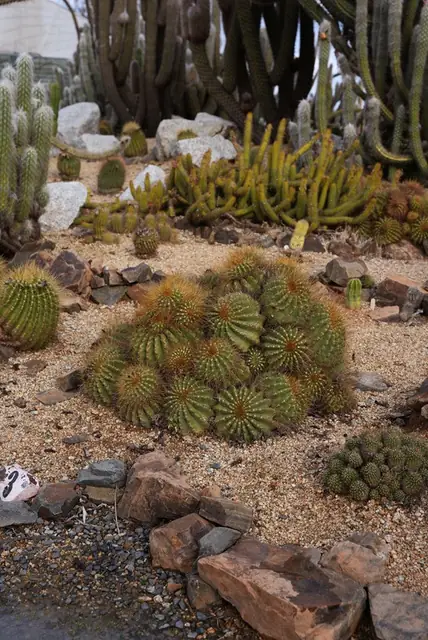
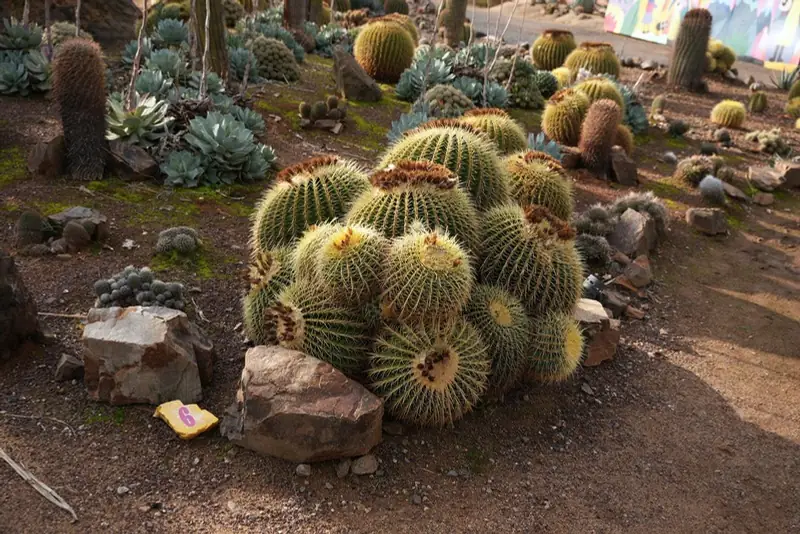
This is probably the most popular cacti of all because of its beautiful golden colour. The largest plants in this area are more than 50 years old. They can live to be several hundred years old and can grow to over 1m in height and 1m in width! The golden yellow flowers appear in the crown of the plant. What a royal plant! This is considered a rare and endangered species in Central Mexico.
Take one home: Golden Ball cactus Or ask at Plant Sales, near reception.
Mexican Fire Barrel
Ferocactus range from small ones (30 cm wide) to very big ones (over 3 metres in height). A large ferocactus needs a powerful taproot to anchor their weighty bodies to the soil. In addition to the taproot, they also develop a dense lateral root system, which can spread to be a stunning 30 metres long.
The purpose of these rambling root systems (which are close to the ground surface) is to absorb vital moisture, even when it is only in the form of dew or fog. There is often heavy dew in arid regions, and where soils are gravelly or without a hard crust, the moisture penetrates very rapidly to reach the roots. Thanks to this adaptation the plant has been able to survive in places where others have become extinct.
The flesh of some Ferocactus is very edible, and tastes like raw potato. At the base of the ‘ferocious’ fishhook spines is a gland containing a sweet sap which the ants milk. In return for the food source, the ants keep the plant clean of bugs, scale and other pests. This variety has beautiful red spines and at sunset they glow like the plant is on fire.
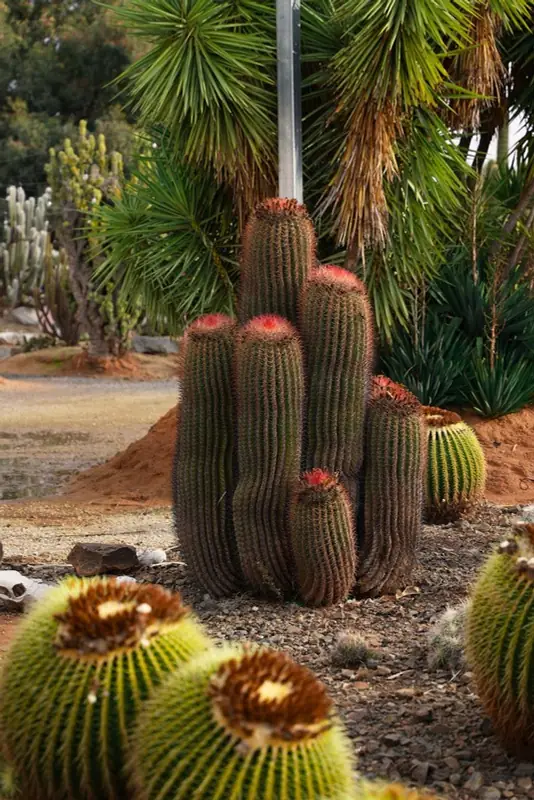
These solitary columned light green cacti can grow to 13m tall and up to 35cm thick at the base. Their flowers range from light to dark red. Notice how the spines point towards the ground? This ensures the droplets from morning dew drip from the spines to the ground, towards the base of the plant. From there, the water gets quickly sucked up by the fibrous roots just under the soil.
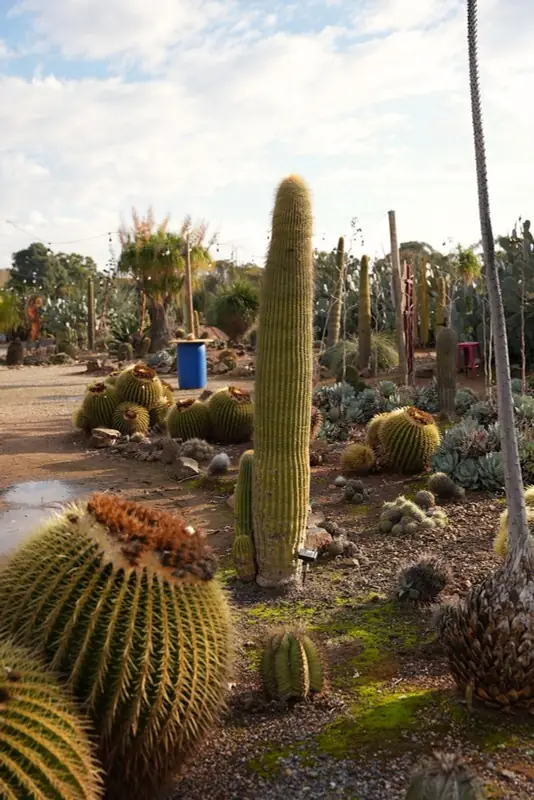
This ferocactus became so heavy we had to prop it up with a post. In their natural environment they would just fall over and new plants would grow along the side of it. After heavy rains in the area, the post of the cactus slipped away. It is now resting on a golden barrel. No one is volunteering to stand it up because it weighs around 2 tonnes.
The Arizona Walk
Welcome to Arizona, home of the famous Saguaro Cactus, the big cactus with arms.
Bishops Cap
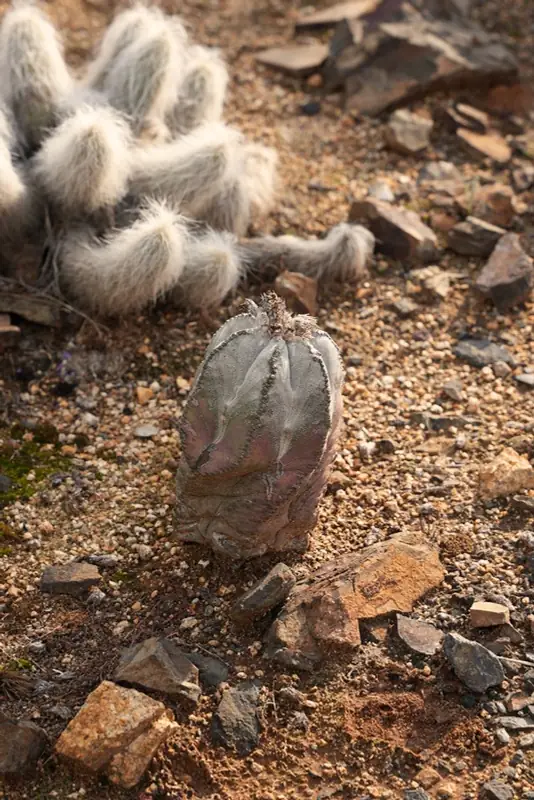
These “sea urchin” looking plants resemble a Bishops Cap in shape. This is a Hybrid variety: notice the beautiful white markings? There are 3 other varieties in this section, see if you can find them! As you might see, their form is very symmetrical and the plants have large yellow or white flowers.
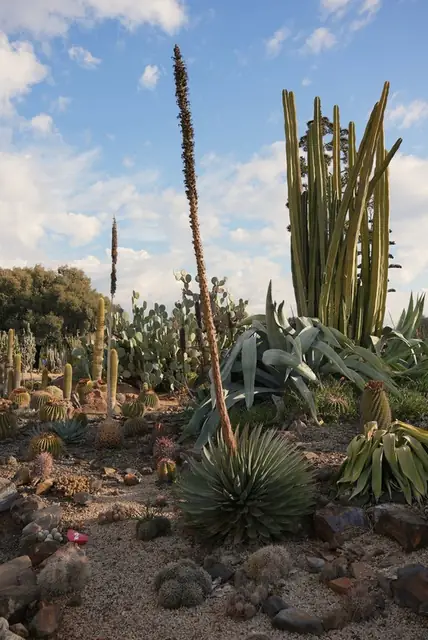
There are more than 300 varieties of Agave, all having the unique characteristic of dying after flowering (which can occur anytime between 7 and 100 years of age). Depending on the species, the flower can attain heights from 1.5m to 11m. Producing such a huge flower stalk, which looks like a tree trunk, it is so exhausting for the plant that soon after flowering it begins to wither and eventually dies.
Turn around to the little area next to the mural to meet Victoria Reginae. This Agave has a dense cabbage form and is signified by its white line formation on the leaves. It almost looks like someone has painted them on with some white paint.
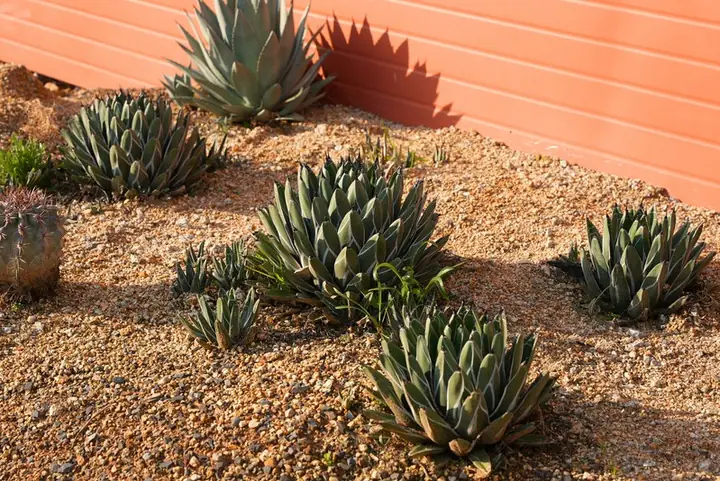
The 12.5m Mural bordering this trail was painted by Tiarne Hall who used to work at Cactus Country and is an incredibly talented young artist.
Tiarne called this creation “Brain Scan” and the ABC did a timelapse of her doing the painting and turned it into a mini documentary which was featured in the ABC Australia Day Concert on January 26th, 2021. We are so proud of her and she has many other artworks around Cactus Country! She still comes to visit us and sometimes works with Jim in the garden.

You will notice lots of different Mammillarias on this walk: they all flower in a ring shape and are sometimes referred to as “Fairy Cactus” or “Bridal Veil”. This species grows in a clump with many different heads, some of these very old specimens have up to 50 heads. Most of the other Mammillarias are single-headed plants.
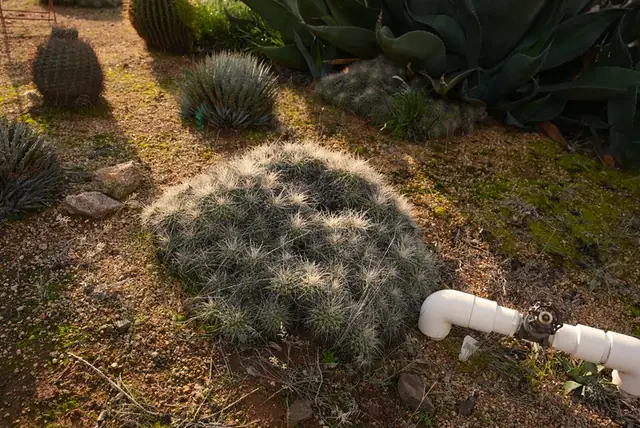
Cardon
This giant plant is referred to as the Elephant Cactus: it's the tallest cactus species in the world with a maximum recorded height of 19.2m with a 1m diameter trunk.
This magnificent specimen weighed in at 25 tonnes. A symbiotic relationship exists with bacterial and fungal colonies on the roots of this plant which enable it to grow on bare rocks where no soil is available. The bacteria can fix nitrogen from the air and break down the rock to produce nutrients.
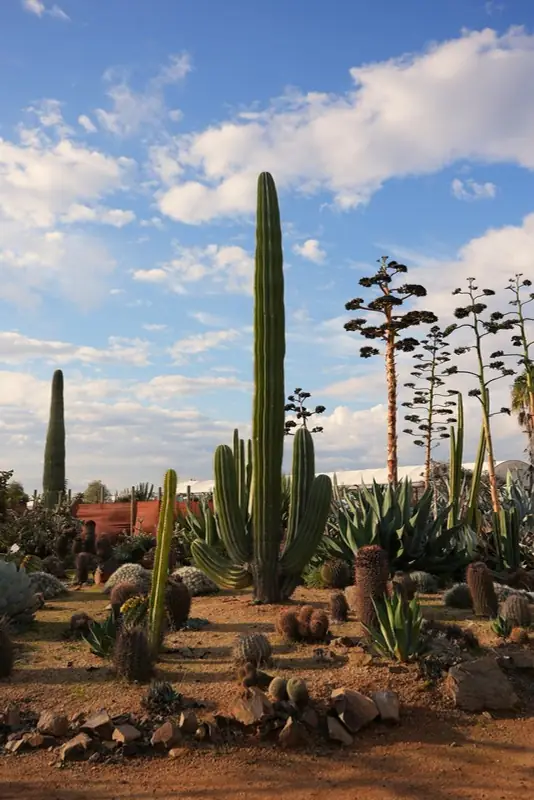
Saguaro
Saguaro (pronounced suh-wah-row), meaning “the big cactus”, is the State flower of Arizona. This plant can grow to a massive height of 15.25m (50ft), but it is not a fast grower. This specimen was only 18 cm high when we planted it back in 1986! It has grown much faster than we expected and in 2010 it flowered for the first time. From our research, we believe it is one of the only 3 Saguaros to have ever flowered in Australia.
Fun fact: a mature Saguaro can store up to 3000 litres of water: a true “Living Water Tower”!
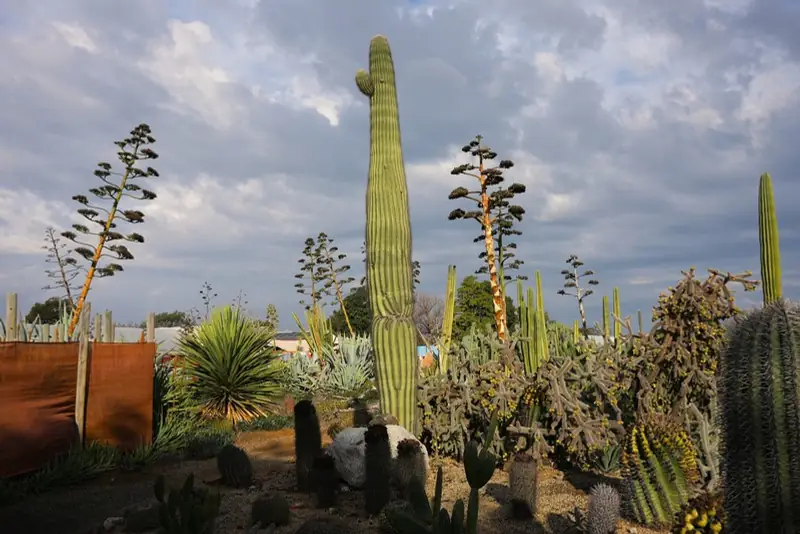
Mexican Fence Post
In very poor areas in Mexico this plant is commonly used to make a fence. A large plant is cut into lengths, dried out so the flesh wouldn't rot and is then planted along a trench. As the cuttings grow it makes a very effective fence. This plant has fallen over and you will see that it is already shooting baby plants from its stem. This is exactly what it does in the wild!
Take one home: Mexican Fence Post cuttings Or ask at Plant Sales, near reception.
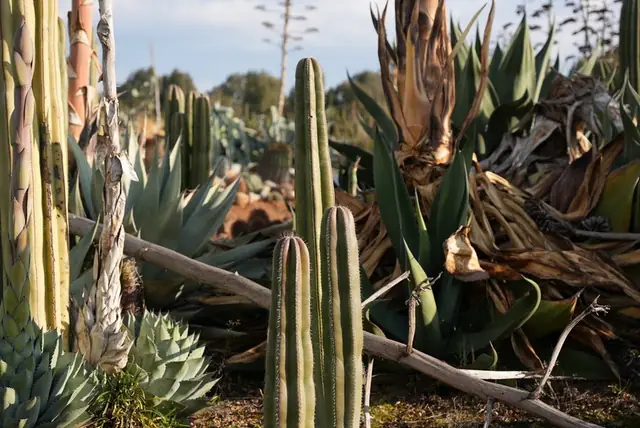
This is a unique cactus because it has no spines! The stalk is very smooth to touch and it can grow to be over 3m tall. This is a naturally occurring mutation and a show stopper in any garden.
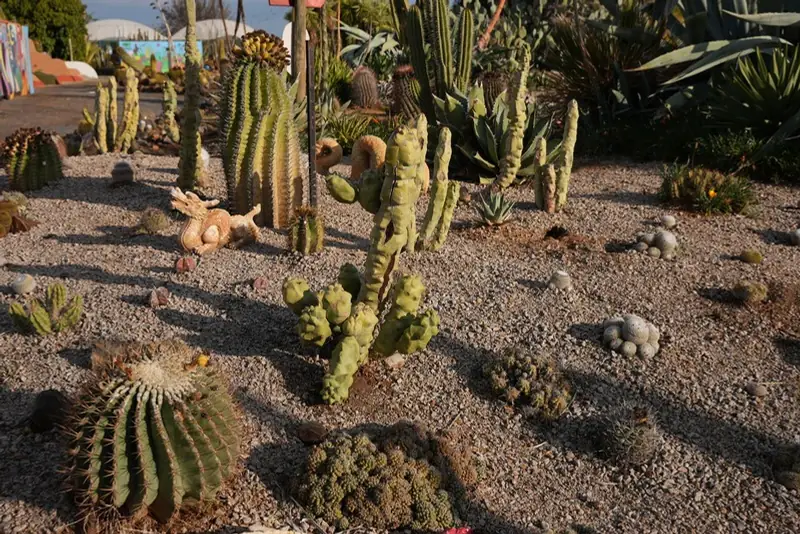
The land of succulents
Enter the large hothouse to begin this trail.
“Succulent” is derived from a Latin word and means juicy, fleshy. Cacti are simply succulents with spines.
A trait which all succulents have is their ability to survive in super dry conditions, even in harsh sunlight.
These plants have adapted their form and function to absorb water as a supply and store it in special organs, reduce evaporation to a minimum, and deter animals from grazing on them.
Cyphostemma Juttae
A slow growing succulent with a huge swollen trunk (caudiciform) which acts as a water reservoir in times of drought. This succulent grows in Namibia and has evolved and adapted to survive the very hot and dry conditions. The white drooping papery pieces of bark help to reflect the sunlight and keep the plant cooler.
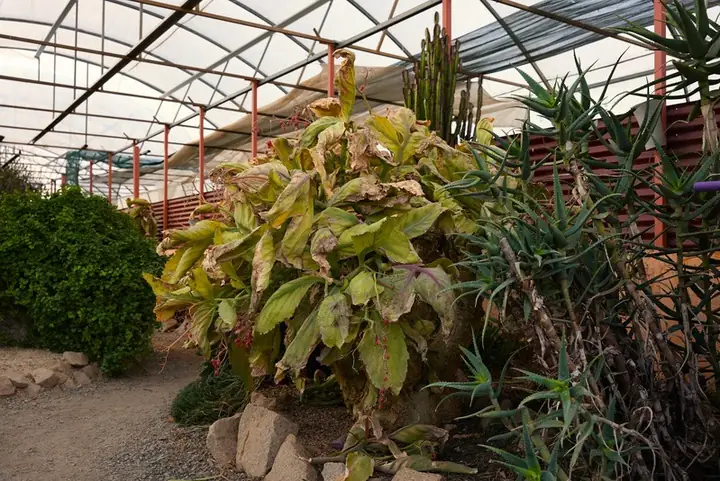
Dioscorea Elephantipes
This plant is native to South Africa and is simply fascinating! The large tuberous stem can grow to 3 metres in circumference and has a deeply fissured surface, resembling an elephant’s foot. In the summer months the plant sheds its green leaves to conserve energy. There are male and female plants which are pollinated by bees. It is believed that African natives used to use the trunk for food and baked bread out of it.
Take one home: Elephant’s Foot Or ask at Plant Sales, near reception.
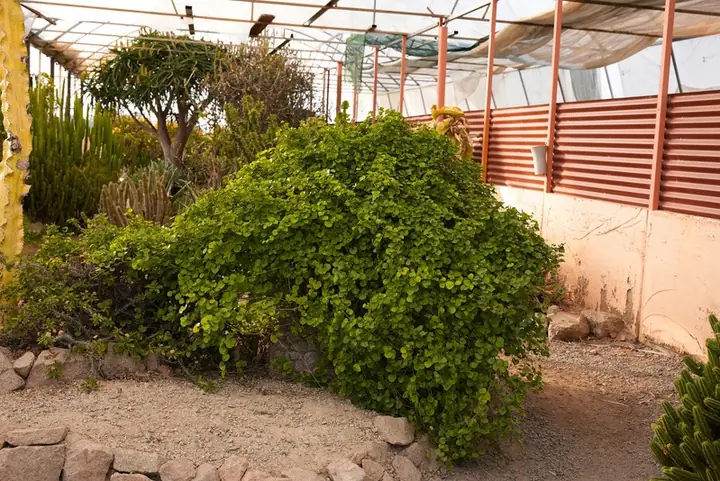
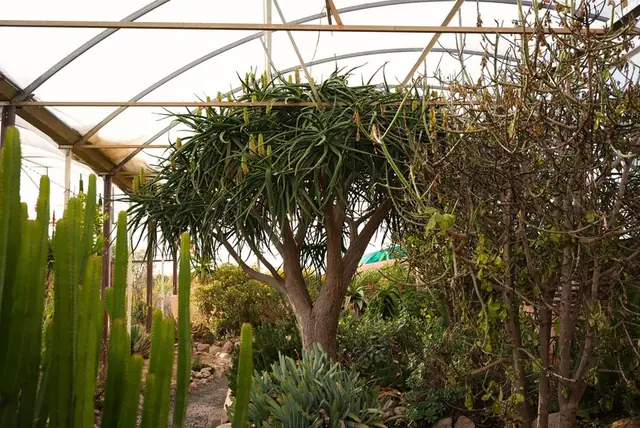
Tree Aloe
This is the largest growing Aloe. It has a smooth grey trunk and a massive base that is similar to a huge Elephant's foot. It is a striking sculptural tree which looks spectacular and can grow up to 20 metres tall!
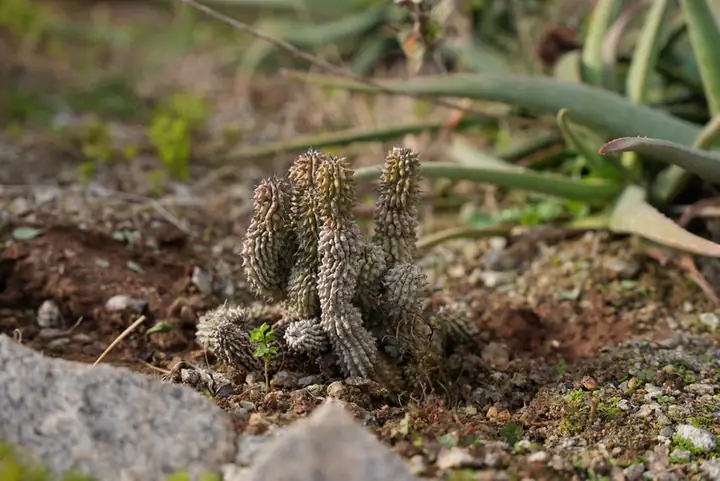
To ensure pollination, this plant has a strange way of enticing insects: it bears an attractive star shaped flower with reddish-brownish spots, resembling meat. In addition, it gives off a disgusting odour of rotting meat (so it is definitely not a good one to plant next to the BBQ). The reason for this strange adaptation, is that where this plant grows in Africa, there are no bees, so the plant needs to attract flies some other way.
The appearance and smell attracts crowds of blowflies, which lay their eggs in the flower, in the belief that the hatching larvae will have food. Unfortunately for the “poor maggots”, the plant has misled them: they crawl around desperately in search of food, and eventually starve to death. This is an example of one of nature’s incredible adaptations to ensure its survival.
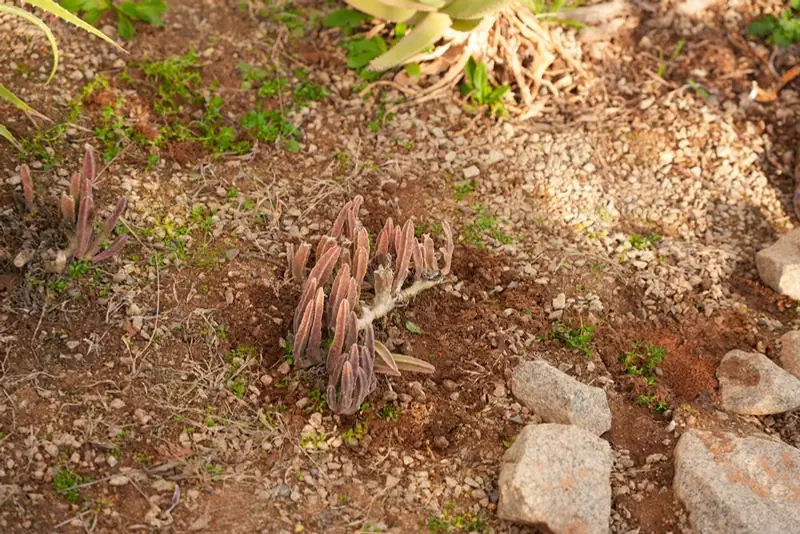
This species is listed as one of 400 medicinal plants at risk of extinction from over collection and deforestation. It is native to the Namib Desert and is harvested as an appetite suppressant. The stems can reach up to 1 metre high and have pink or purple flowers.
Exit the hothouse and wander along the purple trail to find plant number 6.
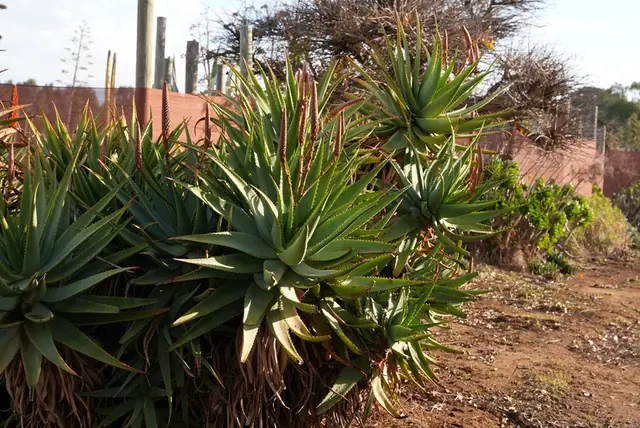
Aloe species can vary in size from a plant no bigger than your hand, to one as tall as a three storey building. Aloes have moisture storage tissues in their thick succulent leaves. This stockpile of water is very beneficial during drought periods, and it also has the ability to heal itself very quickly when leaves or branches are damaged or broken, so it wouldn't lose its valuable supply.
This healing effect has long been recognised by humans, and has been referred to as “the medicine plant”, “first aid plant” and even the “plant of immortality”. Although there are over 450 different species of Aloe, there are only 3 or 4 with medicinal properties. The gel from the leaf can be taken internally for its nutritional and antioxidant effect, or externally for the treatment of burns and wounds.
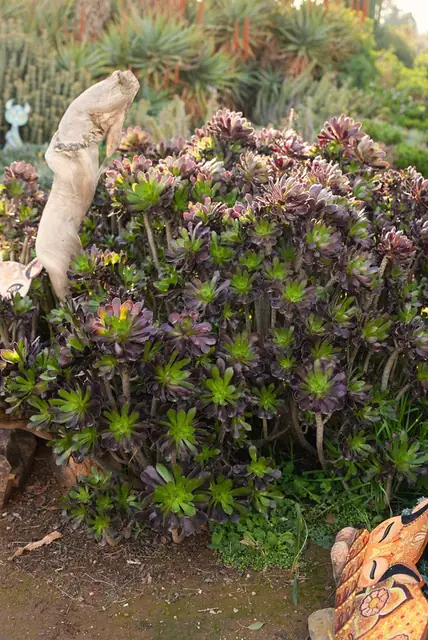
A striking succulent with its dark purple (almost black) rosette leaves. It has large clusters of bright coloured yellow star shaped blooms.
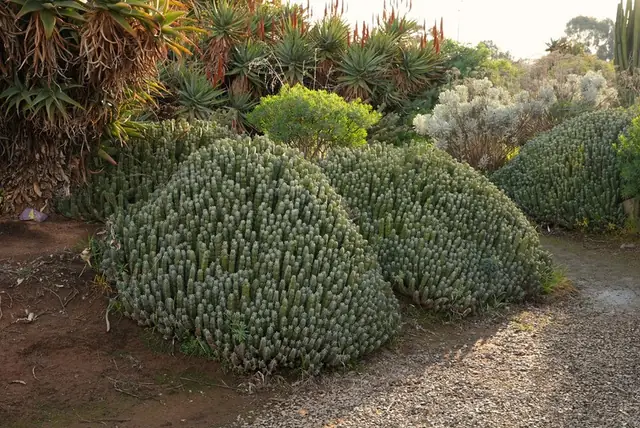
There are over 2,000 different forms of Euphorbia ranging from non-succulent weeds to huge trees. Important: they are succulents, not cacti, even though they often have spikes. All the Euphorbia's organs have a white milky sap, and any injury to the plant causes heavy bleeding. This sap is poisonous and if it touches sensitive areas of the skin it will cause inflammation. The sap is very dangerous and painful in open wounds, the nose, mouth and it can cause temporary blindness to the eye. Animals have also learned to leave this plant alone.
One species of this family of plants has recently attracted the attention of scientists who have discovered that the dangerous sap contains large amounts of hydrocarbons, which may be changed into a petrol-like product. It is extraordinary to think our future cars may run on plant material! It has been calculated that 1 hectare of plants could produce 125 barrels of pure petrol.
Venture out to the new sections of this trail where you can find Bottle Trees that were transplanted from Shepparton and the Pink Floss Tree. If you happen to see it in flower it is spectacular!
Next upAqua Trail→These trails are the newest chapters in our ever growing garden story. These trails are extensions of the older part of the garden and take you deeper into the landscapes of South America. As you wander through, you’ll spot many of Jim’s own hybrids, experiments that have grown into spectacular plants. You’ll also find some of our newest arrivals, freshly acquired and settling into their new desert home. Every visit reveals something different, because this part of the garden is always evolving.
These trails are the newest chapters in our ever growing garden story. These trails are extensions of the older part of the garden and take you deeper into the landscapes of South America. As you wander through, you’ll spot many of Jim’s own hybrids, experiments that have grown into spectacular plants. You’ll also find some of our newest arrivals, freshly acquired and settling into their new desert home. Every visit reveals something different, because this part of the garden is always evolving.
A little world of its own tucked inside the garden. This special island is home to our collection of Oreocereus plants, each one covered in soft, shaggy hair that gives them their mystical, snowy look.
You've now seen the whole garden. Head back to the cafe area and treat yourself to a frozen margarita, tacos or cactus ice cream!
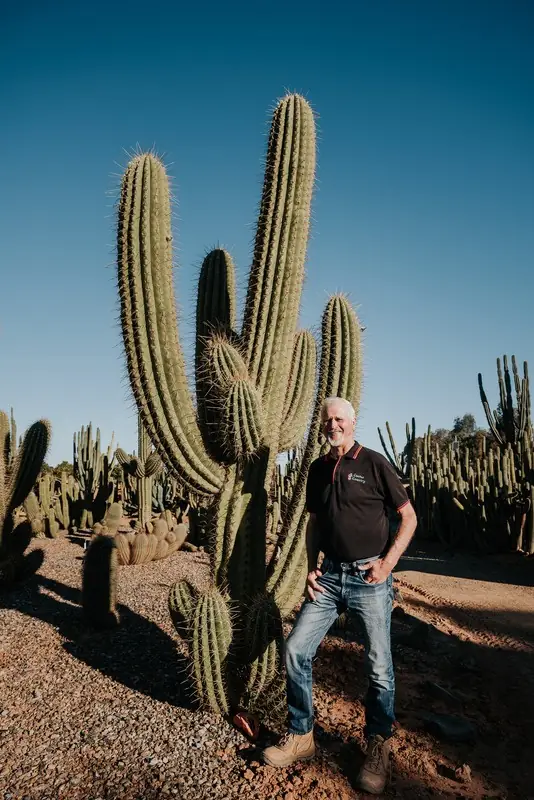
Plant Sales is near reception, so stop in on your way out. Prefer it posted? The shop has plants, cuttings and goodies from the garden.
Visit the shopWhat's flowering, what's on and what's new in the shop.